
Overview
This project links a physics-based energy estimate to an interpretable residual model, then uses the estimates inside a multi-objective dispatch search. EWMA and CUSUM statistics trigger receding-horizon replanning when residual behavior changes.
Evidence and interpretation
The reported run has a high coefficient of determination but a 42.512% MAPE. Both numbers matter: the model captures broad variation while retaining substantial relative error. The optimization results are therefore a computational study, not a production dispatch guarantee.
Reproduction
Run the light pipeline with python SJMMA2026/ProblemE/run.py --mode all --scope light. The repository contains bilingual reports and stable generated figures.
Key findings
- Route and environment features dominate the configured residual correction in the reported run.
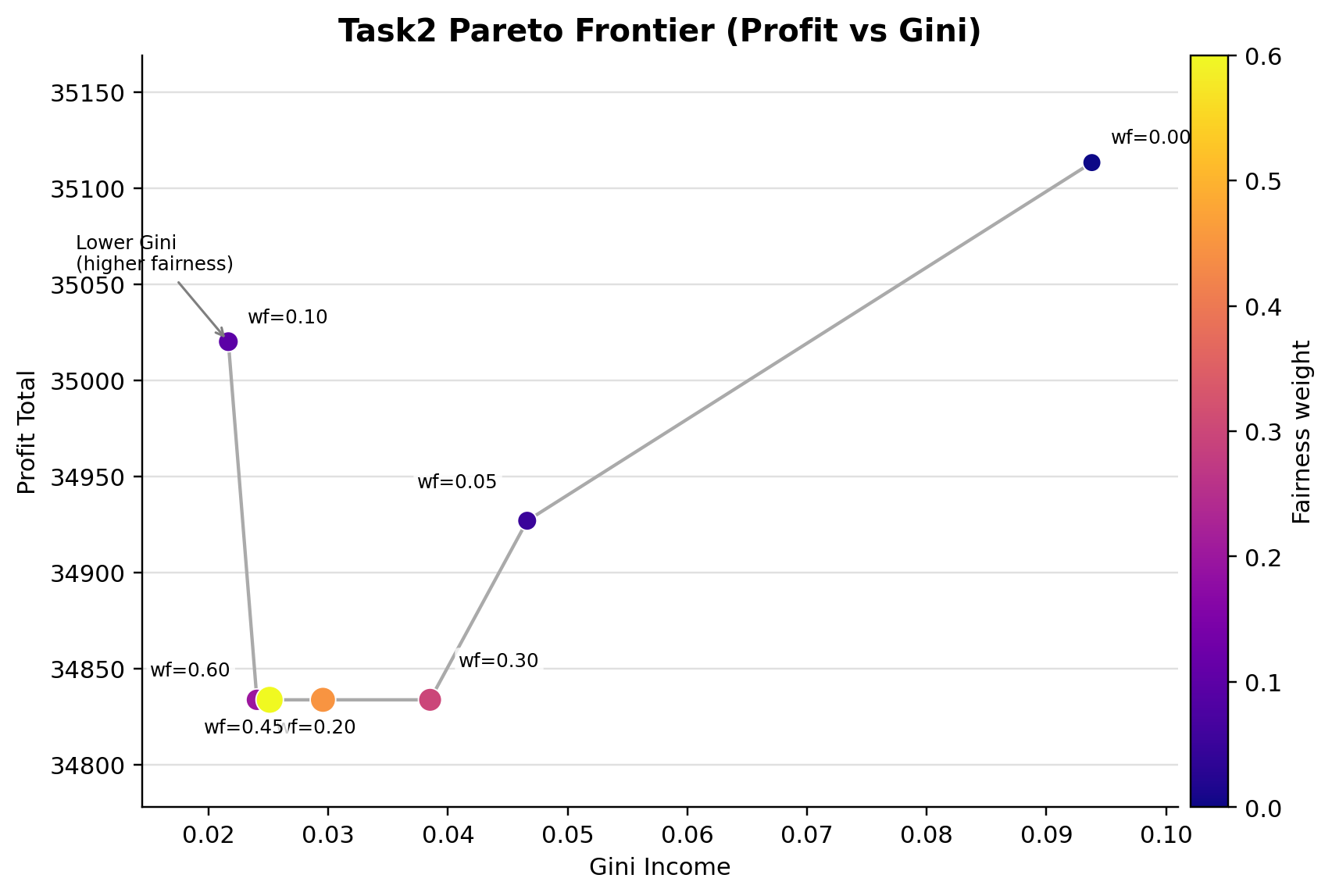
- The schedule experiment exposes a non-degenerate profit-energy-fairness frontier.
Limitations
- The reported energy MAPE is 42.512%, despite a high R².
- Scheduling uses a simplified assignment structure rather than a full exact MILP.
- Disruptions are generated with a stylized simulation.
Technical record
Detailed source, calculations, generated figures, and reproduction instructions are maintained in a private technical workspace. Public articles contain only manually reviewed interpretation and approved figures.
Version history
2026-04-30 — Curated overview reviewed against repository evidence.